















Now Reading: Will AI Replace Graphic Designers? Why Human Creativity Still Matters
-
01
Will AI Replace Graphic Designers? Why Human Creativity Still Matters
Will AI Replace Graphic Designers? Why Human Creativity Still Matters


Will AI replace graphic designers, or simply change how they work? As AI tools become faster and more capable, the creative industry faces difficult questions about jobs, originality, and human expertise. Discover why design still needs creative thinking, practical judgment, and a deeper understanding of people.
Table of Contents
On May 23, 2023, Adobe introduced a Photoshop feature that made plenty of graphic designers nervous. Generative Fill could add, extend, or remove objects from an image using a simple text prompt. Tasks that once required careful masking, retouching, and considerable patience could suddenly happen in seconds. By September 2023, Adobe Firefly was commercially available and integrated into Photoshop, Illustrator, and Adobe Express, bringing AI-generated visuals into everyday creative workflows.
These developments raised a question that’s still making designers uncomfortable: Will AI replace graphic designers, or will it simply change the way they work? It’s a reasonable concern. AI can generate illustrations, remove backgrounds, suggest layouts, and create dozens of visual variations before a human designer has finished their coffee. The technology is genuinely impressive, and pretending otherwise doesn’t help anyone.
But creating an attractive image and solving a design problem aren’t necessarily the same thing. Graphic design involves understanding people, interpreting complicated ideas, making decisions, and communicating messages that mean something. AI can assist with all of this, sometimes remarkably well, but taking complete responsibility for the creative process is a different challenge.
The future of graphic design isn’t just about generating images faster. It’s about using creativity, human understanding, and practical judgment to make those images meaningful
Magazine SAVVY
Graphic Design Is About Solving Problems, Not Just Making Things Look Good
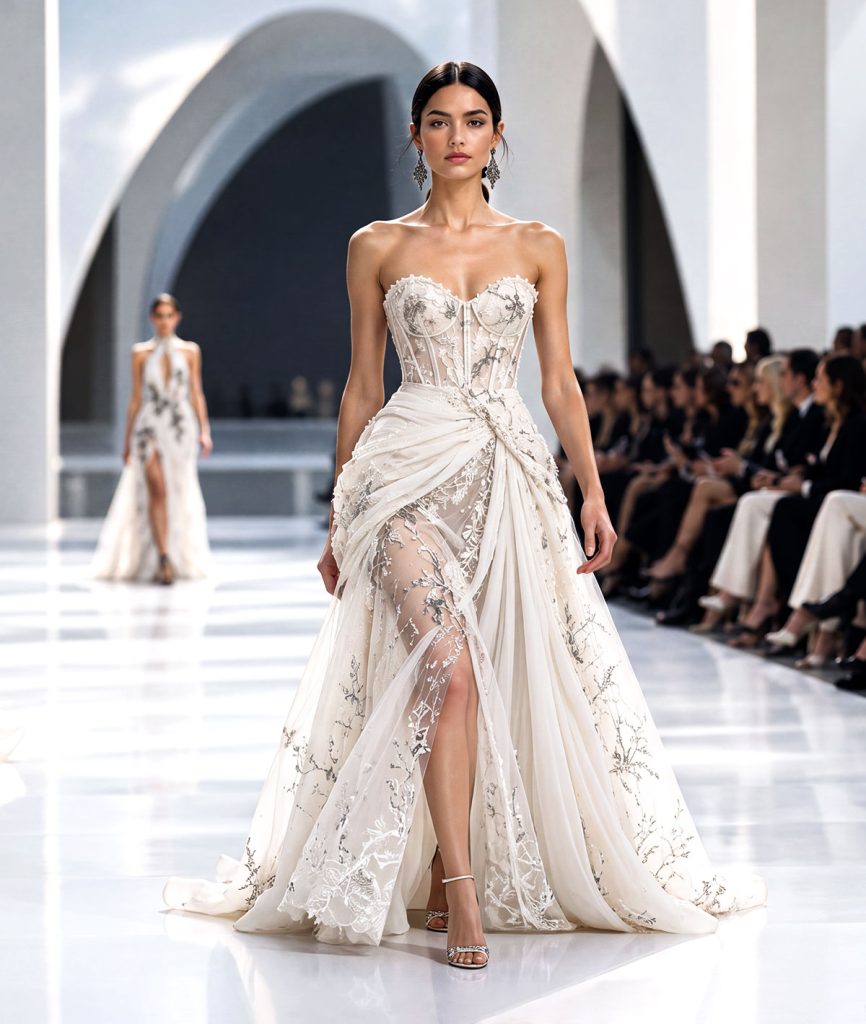
Imagine a small nonprofit organization needs a campaign encouraging young adults to donate blood. An AI image generator might produce beautiful posters featuring smiling people, bold typography, and dramatic red backgrounds. Everything looks polished, and the campaign seems ready to launch.
But what if the organization discovers that young adults aren’t avoiding donations because they lack motivation, but because they’re afraid of needles? Suddenly, the creative direction changes. Instead of producing another exciting poster, a designer might focus on reassuring language, approachable illustrations, and information that makes the donation process feel less intimidating.

Image: AI-generated illustration created for visual representation purposes.
That’s where graphic design becomes much more than arranging attractive elements on a page. A good designer investigates the audience, asks uncomfortable questions, challenges assumptions, and works out what a campaign really needs to communicate. This isn’t some newly invented defense against AI, either. The UK’s Design Council developed its influential Double Diamond framework in 2005, describing four stages of design: Discover, Define, Develop, and Deliver.
Understand, rather than simply assume, what the problem is
Design Council
That’s an important distinction. AI is excellent at generating possible answers when given instructions. It can also help analyze research, identify patterns, and suggest questions. But organizations frequently don’t know what their real problem is when a project begins.
Finding it might require interviews, observing real behavior, understanding competing priorities, or discovering that the original brief was misguided. AI can support that research, but someone still needs to interpret the results, challenge assumptions, and decide what matters.
Human Understanding Makes Design More Meaningful
Think about designing packaging for a children’s product. Bright colors, playful illustrations, and friendly characters are obvious starting points, and an AI system can generate those without much trouble. But an experienced designer might also consider whether the packaging is understandable to parents, whether it communicates age suitability, and whether the illustrations create misleading expectations.
There are cultural considerations, too. A visual symbol that feels positive in one country might carry a completely different meaning somewhere else. Humor, color associations, and social expectations vary between communities, sometimes in ways that aren’t immediately obvious.
AI can analyze cultural information and help identify potential problems, but those assumptions still need validation with real people. A convincing-looking design isn’t automatically a culturally appropriate or effective one.
Human empathy isn’t simply about feeling emotional. In professional design, it means taking responsibility for understanding how other people will experience something. That requires attention, curiosity, and sometimes changing your mind halfway through a project because the original idea wasn’t right.
AI Can Generate Creative Work, but Originality Is More Complicated
Here’s where things get interesting. AI doesn’t just reproduce existing images. Modern generative models can create unfamiliar combinations of objects, styles, compositions, and visual concepts. So claiming that AI cannot be creative at all is too simplistic. However, generating something unusual isn’t necessarily the same as developing a distinctive creative identity.
A brand identity, for example, shouldn’t merely look attractive. It should help people recognize a business, understand its personality, and distinguish it from competitors. Real-world examples, such as the graphic design and visual identity projects featured on AndrisR, illustrate how creative decisions come together in professional branding. An AI-generated logo might look perfectly polished but still feel strangely familiar. This highlights an important distinction between producing appealing visuals and creating something that genuinely stands apart.
Research also suggests that AI assistance can create a tension between improving individual creative outputs and reducing variety across many outputs. In a July 2024 study published in Science Advances, researchers Anil Doshi and Oliver Hauser examined how generative AI affected creative writing. Their experiment involved 293 participants producing short stories. Participants given AI-generated ideas generally produced stories rated as more creative and enjoyable, particularly when they were less creative writers to begin with. However, the AI-assisted stories were also more similar to one another.
An important detail: this was a writing experiment, not a study of graphic designers. It doesn’t prove that AI-generated visual identities will become identical. Still, it raises an interesting possibility. When thousands of people use similar systems to generate ideas, they may all benefit individually while producing less variety collectively. That’s a potential problem for brands trying to stand apart in an increasingly crowded visual landscape.
The future of graphic design won’t be defined by how many ideas AI can generate, but by how effectively designers turn those possibilities into distinctive, meaningful creative work
Magazine SAVVY
One underrated part of creative work is knowing what not to use. A designer might explore twenty concepts and reject nineteen, not because they’re technically poor, but because they communicate the wrong message. Maybe a font feels too playful for a financial institution. Maybe an illustration makes a serious campaign feel childish. Or maybe the most attractive concept simply doesn’t fit the brand.
AI can help evaluate these choices against supplied criteria, but it cannot reliably guarantee on its own that those criteria reflect an organization’s real-world needs. Sometimes the strongest design isn’t the prettiest option. It might be the one that challenges expectations or communicates something important with almost no decoration.
Good Design Also Needs Accessibility and Practical Judgment
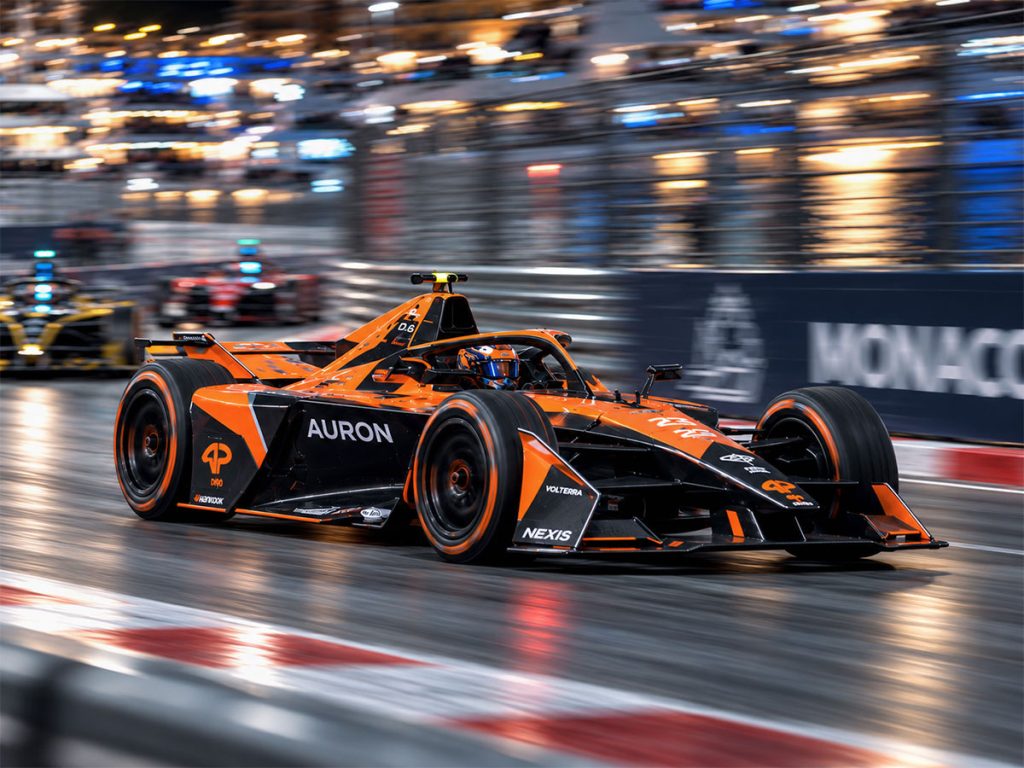
Consider a website with elegant pale-gray text against a white background. It might look sophisticated in a mockup, but some visitors will struggle to read it.
The World Wide Web Consortium’s Web Content Accessibility Guidelines (WCAG) 2.2 require a contrast ratio of at least 4.5:1 for most normal-sized text at Level AA, with certain exceptions.

Image: AI-generated illustration created for visual representation purposes.
Good designers need to think beyond visual appearance. Their responsibilities often include:
- Accessibility: Ensuring text, colors, and visual information work for people with different abilities.
- Consistency: Keeping typography, spacing, and brand elements coherent across multiple formats.
- Production requirements: Preparing artwork for printing, packaging, different screen sizes, and other practical uses.
- Accuracy: Checking names, product details, instructions, and other information before publication.
AI can assist with these tasks, and automated testing can catch some mistakes more consistently than a tired human. But a generated image that looks finished isn’t necessarily a production-ready design. Somebody still needs to check it, make corrections, and take responsibility when something goes wrong.
Will AI Replace Graphic Designers or Just Change Their Jobs?
It would be misleading to pretend that every graphic design job is safe. Some work is already particularly suitable for automation: routine background removal, simple promotional graphics, repetitive layout variations, image resizing, and template-based social media content.
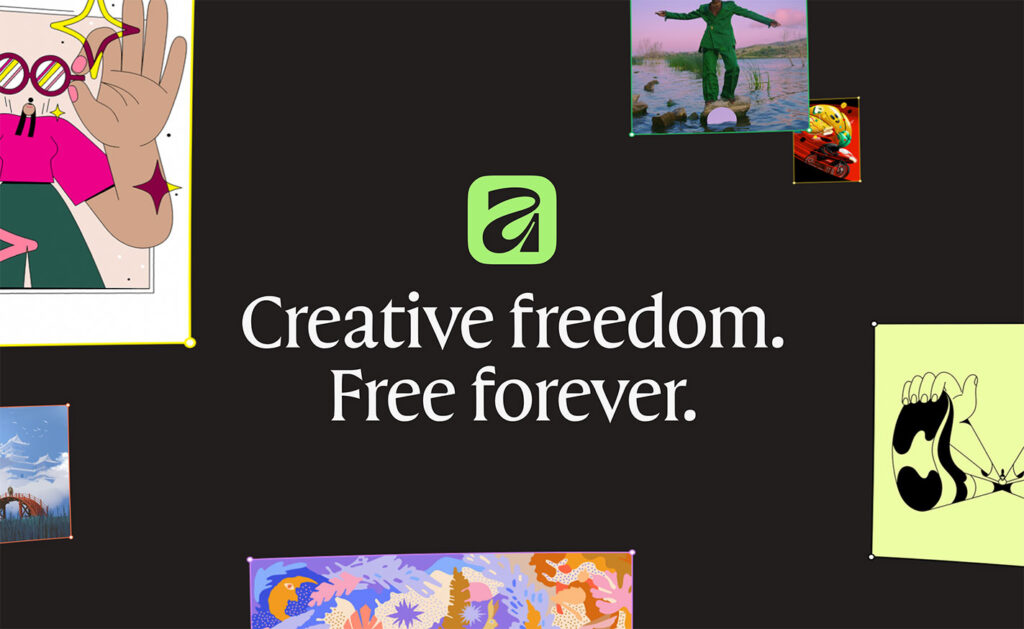
Businesses can use AI-powered tools to complete many of these tasks without commissioning an individual designer. At the same time, professional design software is becoming more accessible. For example, Canva’s decision to make Affinity free allows designers to access professional creative tools without a software subscription, although some AI-powered features remain part of paid Canva plans. These developments are changing the economics of the profession, making it easier to produce visual content while putting additional pressure on designers to demonstrate the value of their expertise.
According to the U.S. Bureau of Labor Statistics, employment for graphic designers is projected to decline by 2% between 2025 and 2035, from approximately 253,100 to 248,800 positions.
Make graphic designers more productive and reduce the need for these workers
U.S. Bureau of Labor Statistics
That’s hardly reassuring. However, the same forecast estimates approximately 16,000 job openings annually over that decade, largely because existing workers will change careers or retire. These are projections, not confirmed future job losses, and they shouldn’t be interpreted as proof that AI will eliminate the profession.
The World Economic Forum’s Future of Jobs Report 2025 also placed graphic designers just outside its ten fastest-declining occupations, based on anticipated changes in employment. Again, that’s a forecast rather than a record of jobs already eliminated, and it doesn’t tell us exactly how individual designers or businesses will be affected.
The bigger picture is more complicated. A May 2025 study by the International Labour Organization and Poland’s NASK research institute found that approximately one-quarter of global employment was potentially exposed to generative AI. Its assessment was that job transformation, rather than complete replacement, was the more likely overall outcome. However, that doesn’t mean every worker will benefit equally.
The growing use of AI in graphic design is likely to put greater pressure on designers who rely mainly on repetitive production tasks than on those who provide research, creative direction, brand strategy, and complex problem-solving. Junior designers may find this especially difficult if companies automate the simpler assignments that traditionally helped people develop their skills.
The profession could become more productive while offering fewer straightforward entry points for newcomers. Both things can be true, and it’s worth acknowledging that possibility instead of treating AI as either a miracle solution or a threat that can simply be ignored.
Why Human Designers Will Still Matter in an AI-Driven Future
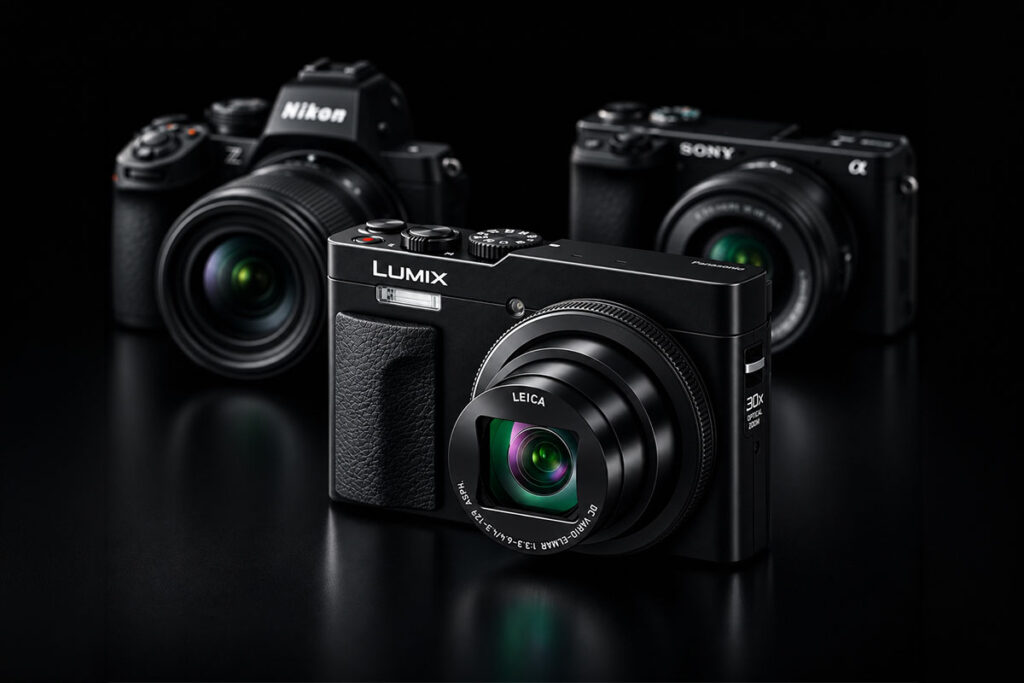
There’s another complication that doesn’t disappear just because AI produces something beautiful: who owns the finished work, and who is responsible if there’s a problem? These questions are becoming increasingly important as AI-generated material moves from casual experimentation into commercial advertising, branding, and published creative work.
On January 29, 2025, the U.S. Copyright Office released the second part of its report on AI and copyrightability. It explained that generative AI outputs may receive copyright protection when a human author contributes sufficient expressive elements. Merely providing prompts, however, is not necessarily enough to qualify for copyright protection.

Image: AI-generated illustration created for visual representation purposes.
Our conclusions turn on the centrality of human creativity to copyright
Shira Perlmutter, then Register of Copyrights, Director of the U.S. Copyright Office
The report also clarified that using AI as a creative tool does not automatically prevent copyright protection. This reflects U.S. copyright principles rather than a universal rule covering every country, and individual cases depend on their circumstances. Businesses also need to consider intellectual-property rights, brand consistency, confidential materials, licensing terms, and the origins of creative assets.
Adobe, for example, stated in its September 2023 Firefly announcement that its first model was trained using Adobe Stock images, openly licensed content, and public-domain material. However, that’s Adobe’s description of its training approach, not a guarantee that every possible AI-generated output is free from legal risk.
Human designers, creative directors, and legal teams can assess those risks together. A professional designer isn’t automatically a copyright expert, of course, but they can document decisions, investigate questionable imagery, and coordinate appropriate approvals. These responsibilities remain important as AI becomes more deeply integrated into professional creative workflows. And what about the future?
My prediction is that AI will become an increasingly ordinary part of graphic design workflows. Not every designer will use it in the same way, and not every project will benefit from it, but resisting all AI tools may become as impractical as refusing to use digital editing software.
The opportunity is to spend less time on repetitive production and more time on the decisions that make creative work valuable. A designer might use AI to explore ten visual directions, then combine research, experience, and client feedback to develop one that genuinely fits. Choosing the right software is also becoming part of that process, as modern graphic design tools offer different approaches to AI assistance, creative control, collaboration, and professional production. Understanding those differences can help designers build more effective workflows without sacrificing the judgment and originality that make their work valuable.
For designers thinking about their future, a few skills are particularly worth strengthening:
- Creative strategy: Understanding business goals, audience needs, and the purpose behind a design.
- Communication: Asking better questions, explaining decisions, and working effectively with clients.
- AI literacy: Knowing what tools can do, where they fail, and how to review their outputs.
- Specialized expertise: Developing stronger knowledge of branding, packaging, information design, accessibility, or another demanding field.
There are risks, of course. The growing use of AI in graphic design may encourage clients to expect more work for less money, especially when images can be generated in seconds. Designers may increasingly have to explain why thoughtful research, creative direction, and professional judgment deserve a budget when producing visuals seems almost free.
But this shift also creates opportunities for professionals who can demonstrate the difference between simply producing graphics and creating designs that genuinely work. The most valuable designers won’t necessarily be those who generate the greatest number of images. They’ll be the ones who understand which graphics are worth producing in the first place, why those particular choices matter, and how to make them effective for real audiences.
No one can honestly guarantee that future AI systems will never develop capabilities that handle more of those decisions. Technology changes, and predictions about its limits have a habit of aging badly. For now, though, the distinction between generating visual content and solving meaningful design problems remains important.
Imagine that blood-donation campaign again. AI can produce another poster in seconds, change the colors, replace the photograph, and suggest a stronger headline. But the harder question is whether someone who’s genuinely afraid of donating blood will see that poster and feel understood. That’s the question a good designer keeps coming back to, and it’s worth more than another beautiful image.
Related Posts


Previous Post
Next Post
Previous Post

Next Post












Advertisement