















Now Reading: MXGP 2027: Exciting New Teams and Fierce Rivalries
-
01
MXGP 2027: Exciting New Teams and Fierce Rivalries
MXGP 2027: Exciting New Teams and Fierce Rivalries

MXGP heads into 2027 with Jeffrey Herlings on top, Romain Febvre switching to Ducati, and Triumph preparing its first factory 450 campaign. Two Chinese brands want in, China gets a second Grand Prix, and the calendar stretches to 20 rounds. Here's what matters—and what remains uncertain.
On September 20, 2026, Jeffrey Herlings finished the MXGP season in Darwin, Australia, with another dominant performance. Two race wins, a sixth world championship already secured, and a remarkable 125 career Grand Prix victories. Pretty impressive for someone who had changed manufacturers after spending 17 years with KTM. But while Herlings was celebrating his first world title with Honda, the rest of the motocross world was already looking ahead.
Ducati had secured another former world champion. Triumph was preparing to enter the premier class with its own factory team. Two Chinese manufacturers were announcing ambitious plans. And the 2027 calendar? Twenty Grands Prix across four continents, including two visits to China. There’s a lot happening, and the upcoming championship could be one of the most interesting seasons in recent years.
The 2027 FIM Motocross World Championship looks set to bring more than another battle for the championship trophy. We’re talking about new factory programmes, experienced riders switching machinery, young talent moving into bigger classes, and a demanding schedule that will test everyone involved. So, what can we actually expect? Here’s what’s confirmed as of October 24, 2026, what teams are planning, and where things could get interesting.
The MXGP Title Fight: Can Anyone Stop Jeffrey Herlings?
Let’s start with the obvious question. Who can beat Jeffrey Herlings? The Dutch rider’s 2026 campaign was extraordinary. Racing for Honda HRC Petronas, Herlings collected 13 Grand Prix victories, finished on the podium 16 times and ended the championship with 973 points. Romain Febvre finished second on 805, while Tim Gajser completed the championship podium with 659. That’s a 168-point winning margin. Not exactly a photo finish.
Perhaps the most interesting part was how Herlings achieved it. Speaking after the Australian Grand Prix, he admitted:
I was faster in 2018, but I am smarter in 2026
Jeffrey Herlings
That sentence says plenty about the rider Herlings has become. He’s no longer relying entirely on explosive speed and enormous risks. Experience, race management and consistency have become just as important. His partnership with Honda clearly worked in 2026, making him the rider everyone will measure themselves against in 2027. Still, defending a championship is never simple, especially when several former champions and ambitious young riders are determined to end your winning streak.
The Challengers Have Plenty to Prove
Romain Febvre might be the most intriguing name heading into next season. The Frenchman won the MXGP world championship in 2015 and again in 2025, then finished runner-up in 2026. Now he’s preparing for another challenge. Ducati has officially announced that Febvre will join the Red Bull Ducati Factory MXGP Team for 2027 and 2028, racing the Desmo450 MX under team manager Louis Vosters. It’s a fascinating move because Febvre brings proven championship-winning experience to a manufacturer still building its motocross credentials.
Then there’s Tim Gajser. The Slovenian raced Yamaha machinery in 2026 and finished third in the standings. He’s already a five-time motocross world champion, so dismissing him after one season without the title would be a mistake. Tom Vialle deserves attention, too. The French rider finished fourth in his rookie MXGP season with Honda, showing the kind of progress that could make his second year particularly interesting.

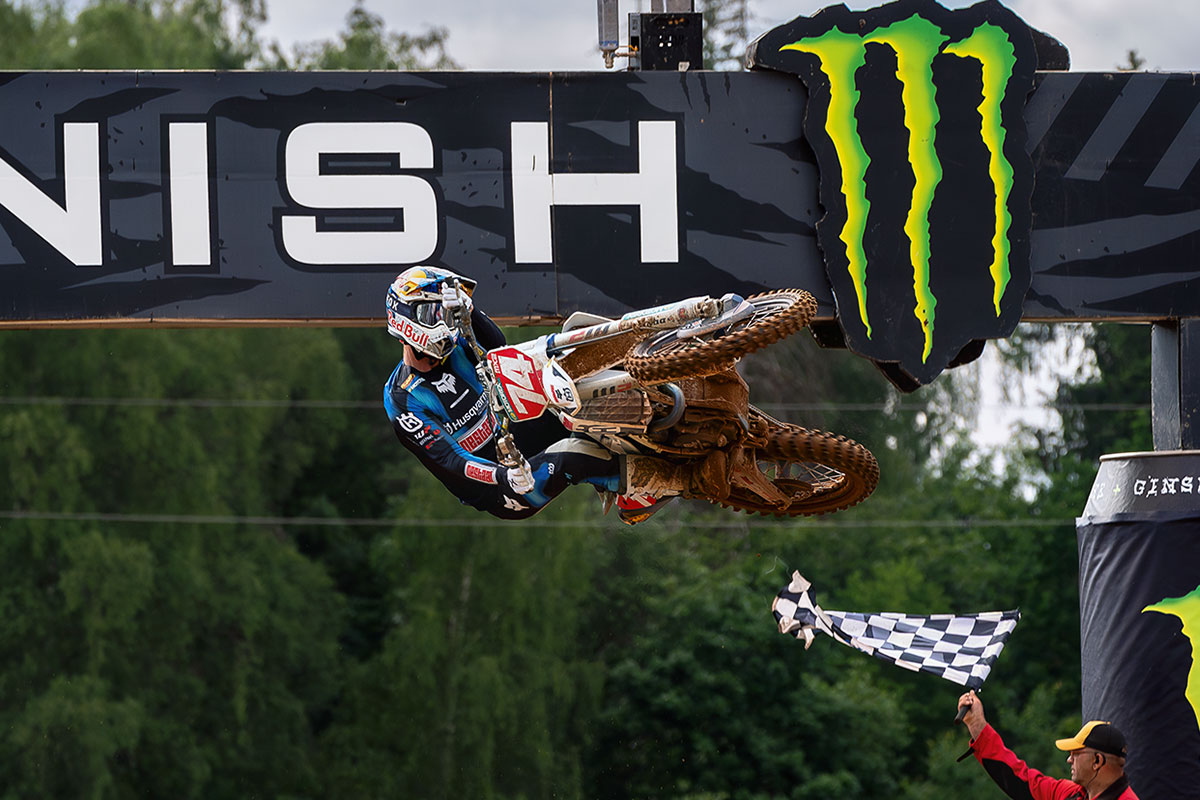
Image: Original photograph taken by Andris Rozentāls at MXGP of Latvia 2024 and published by AndrisR.
And don’t forget Lucas Coenen. The young Belgian finished sixth in 2026 but showed serious race-winning speed earlier in the championship. He also helped Belgium win the October 2026 Motocross of Nations alongside his brother Sacha and Liam Everts, ending the country’s 13-year wait for victory.
My prediction: Herlings begins 2027 as the benchmark, but Febvre, Gajser, Vialle and Coenen all have credible routes into the title conversation. Much will depend on winter development, team continuity and avoiding injuries. Speed matters, of course. So does making it through 20 demanding rounds without throwing away valuable championship points.
New Manufacturers Could Change the Competition
For years, familiar motorcycle manufacturers have dominated the MXGP paddock. KTM, Honda, Yamaha, Kawasaki and Husqvarna have helped define modern Grand Prix motocross. More recently, Ducati and Triumph have added fresh competition, bringing different engineering approaches and new factory investment into the sport. In 2027, that expansion becomes even more interesting, especially with additional manufacturers preparing to challenge the established order.
Triumph Makes Its Move Into MXGP 2027
One of the biggest confirmed developments is Triumph Factory Racing’s arrival in the premier category. After establishing itself in MX2 with the TF 250-X, the British manufacturer will enter MXGP with the TF 450-X. Its confirmed premier-class riders are Guillem Farres and Mikkel Haarup, giving Triumph a combination of emerging talent and experience as it tackles a considerably tougher category.
Farres arrives with serious credentials. He won the 2026 MX2 world championship, delivering Triumph’s first motocross world title and helping the manufacturer secure a championship one-two with Camden Mc Lellan. Mc Lellan will remain in MX2 for 2027, while Farres has committed to Triumph through a new three-year agreement. Discussing the announcement, he said:
To be part of Triumph’s first factory team in the MXGP class is a dream come true and a real privilege
Guillem Farres
Of course, dominating MX2 doesn’t automatically translate into immediate MXGP success. The bigger motorcycles demand different riding techniques, more physical strength and careful power management. Developing a competitive 450cc machine over an entire Grand Prix season is another challenge altogether. But Triumph has already shown it can develop winning equipment remarkably quickly, and its factory programme has demonstrated that it isn’t afraid of competing directly with established manufacturers.
My take: Regular top-ten finishes would provide a useful foundation for Triumph’s first MXGP season. Podiums would make an even bigger statement. Expecting an immediate world title, though, feels premature. Building a competitive 450cc programme takes time, and consistency across different tracks will be just as important as raw speed.
China Is Entering the Factory Racing Conversation
Here’s another development that shouldn’t be overlooked. In September 2026, MXGP announced that KOVE and ZXMOTO had confirmed intentions to compete in the championship from 2027. Their arrival could eventually add another competitive dimension to the series, although both projects are still at an early stage.

Image: Original photograph taken by Andris Rozentāls at MXGP of Latvia 2025 and published by AndrisR.
KOVE is preparing a two-machine MXGP project, led by team manager Tom Steensels. The manufacturer, founded in 2017, already has international off-road racing experience through events such as the Dakar Rally. Its ambitions are clear:
This is the beginning of a long-term factory racing program with one clear goal: to compete and establish KOVE at the highest level of motocross
KOVE
ZXMOTO is also preparing a 450cc motorcycle for MXGP competition. The company says its machine is already running, with racing director Jesús Rincón helping organise the project. Its target is a full-season programme, ideally with two riders. There is an important distinction here: both manufacturers have announced their intentions, but their final 2027 rider line-ups and competitive performance remain unconfirmed.
Will they challenge established factory teams immediately? Probably not. The opportunity is bigger than instant podiums, however. World Championship racing offers Chinese manufacturers an international testing platform, engineering experience and visibility in major motorcycle markets. Strong performances could eventually increase competition between brands and expand the sport’s audience.
Meanwhile, KTM is reorganising its own Grand Prix operation. Following Joel Smets’ departure as team manager, Stefan Simpson has been appointed to oversee its factory motocross programme. KTM has said its complete 2027 rider roster will be announced separately. Established teams aren’t standing still, either, which makes the ongoing manufacturer competition particularly interesting.
The MXGP 2027 Calendar: More Racing, More Travel
The calendar is another major talking point. The FIM and Infront Moto Racing have announced a provisional 20-round championship stretching from February to October 2027. The opening Grand Prix is scheduled for February 28 in Almonte, Andalucía, Spain. The championship is due to finish in Switzerland on October 3, before the Motocross of Nations takes place at Assen, Netherlands, on October 10.
A few dates stand out:
- February 28 – Andalucía, Spain: The championship begins earlier than usual for many traditional European racing programmes.
- April 18 – Mérida, Spain: The MXGP of Extremadura brings World Championship racing to western Spain.
- May 2 – Shanghai, China: The Chinese Grand Prix moves into a spring slot.
- May 23 – Águeda, Portugal: A favourite venue returns, with its distinctive orange hard-pack soil.
- June 27 – Foxhills, Great Britain: The British Grand Prix also includes the EMX250 European Championship.
- August 1 – Lommel, Belgium: One of the calendar’s toughest deep-sand challenges.
- September 12 – Ziyang, China: A second Chinese Grand Prix makes its debut.
- September 19 – Darwin, Australia: Another long-distance trip during the championship’s closing stages.
Some calendar details remain provisional, including the Swiss venue. The updates matter, too. On September 17, the FIM confirmed Ziyang in Sichuan province as the second Chinese round. Then, on October 15, organisers confirmed Águeda and Mérida, replacing previously unannounced locations.
For fans, the variety is fantastic. For teams? Complicated. Racing at somewhere like Lommel is completely different from competing on the hard-packed dirt of Águeda or managing a hot Grand Prix weekend in Darwin. Bike setup, suspension, tyre selection, fitness and riding technique all become decisive. And with racing across multiple continents, freight logistics and travel costs remain unavoidable pressures, particularly for smaller independent teams.

Image: Original photograph taken by Andris Rozentāls at MXGP of Latvia 2025 and published by AndrisR.
One interesting feature of the schedule is the substantial July break. After Foxhills in late June, MXGP resumes at Loket in the Czech Republic on July 25. That could give injured riders time to recover and manufacturers an opportunity to introduce technical improvements. It might also interrupt a rider’s momentum, especially if they have been building confidence through consecutive strong results.
MX2 and Women’s Motocross Deserve Attention Too
The MXGP title naturally attracts the biggest headlines, but 2027 is shaping up to be important for the supporting championships. MX2 will enter the new season without its reigning champion, Guillem Farres, who is moving into the premier class. Camden Mc Lellan remains with Triumph after finishing runner-up in 2026, making him one of the obvious riders to watch.
Sacha Coenen, Liam Everts and Simon Längenfelder also established themselves among the leading MX2 competitors in 2026. Their confirmed team arrangements and competitive form will help determine the next title battle. Ducati is expanding its involvement in MX2 as well. Nicolai Berg Skovbjerg, runner-up in the 2026 EMX250 European Championship, has been confirmed alongside Ferruccio Zanchi for the Beddini Racing Ducati MX2 Factory Team.
For the women’s championship, the FIM has scheduled six WMX rounds, beginning in Andalucía and concluding in Darwin on September 19. That Australian finale should be worth following, especially after Daniela Guillén became Spain’s first WMX world champion in 2026. The EMX125 and EMX250 championships will also provide young riders with opportunities to develop on some of motocross’s biggest weekends. And that’s essential. Today’s European Championship prospect could be tomorrow’s MXGP race winner.
What Could Define the 2027 Season?
Beyond the confirmed announcements, several factors could shape the championship. The first is reliability. Twenty Grands Prix mean a long season of demanding racing, and the fastest motorcycle isn’t necessarily the most successful if technical problems or injuries regularly interrupt results. A rider capable of winning several races can still lose a championship through a handful of difficult weekends.
Factory development will also be crucial. Ducati and Triumph have ambitious plans, while KOVE and ZXMOTO are preparing their entries. But developing a motorcycle that performs consistently across sand, hard-pack and muddy circuits takes time. Manufacturers will need to balance outright performance with reliability, durability and rider confidence throughout the season.
Then there’s the younger generation. Herlings, Febvre and Gajser bring enormous experience, while riders such as Vialle, Coenen and Farres represent a different stage of their careers. The question isn’t whether the younger riders are talented. Clearly, they are. It’s whether they can combine speed with the kind of consistency that wins world championships against opponents who have spent years learning how to manage an entire season.
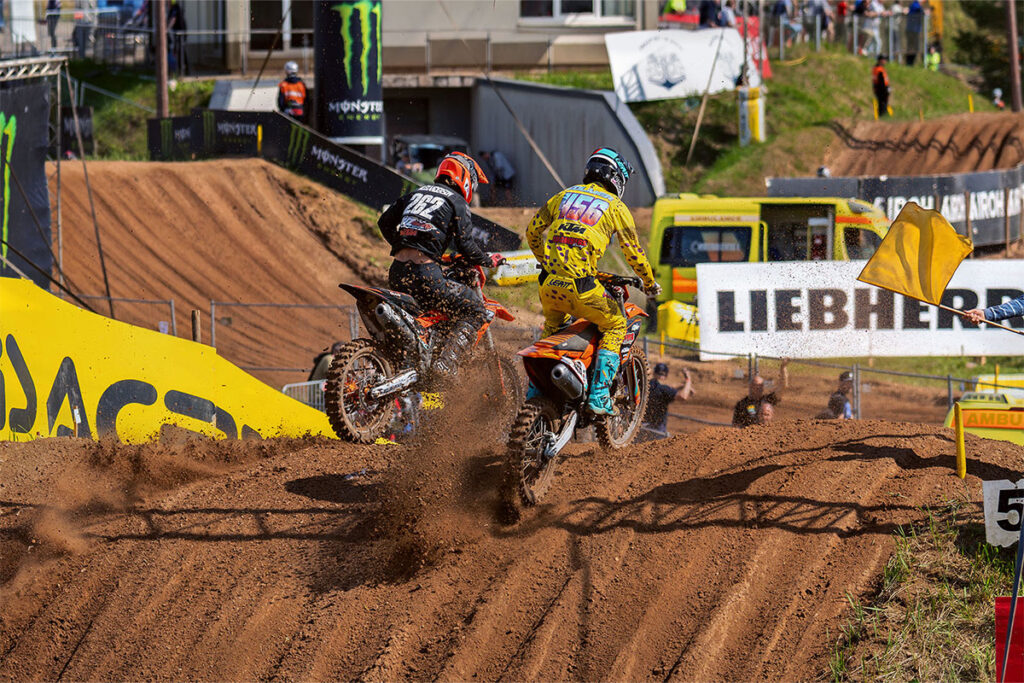
Image: Original photograph taken by Andris Rozentāls at MXGP of Latvia 2025 and published by AndrisR.
The championship’s growing international reach could be just as significant. Two Chinese Grands Prix in the same season represent a major milestone. The FIM has confirmed this will be the first time China hosts two MXGP rounds in one year. Infront Moto Racing is also strengthening its media arrangements, announcing on October 22 that broadcaster GP1 had extended its partnership through 2031, maintaining coverage across several Central and Eastern European markets.
These developments create opportunities for new fans, sponsors and manufacturers. But international expansion also needs to make financial sense for the people actually competing. Bigger travel commitments mean increased costs, and smaller teams may struggle to match the resources available to factory-backed operations. That balance will be worth watching as the series continues to grow.
And then there’s the Motocross of Nations. Assen last hosted the event in 2019, when the Netherlands won at home with Jeffrey Herlings, Glenn Coldenhoff and Calvin Vlaanderen. With Belgium arriving as the 2026 winner, the October 2027 event could bring another memorable national-team showdown.
My prediction for 2027? Herlings remains the rider to beat, Ducati’s progress with Febvre becomes one of the biggest stories, and Triumph proves capable of challenging established MXGP competitors more frequently as the season develops. The Chinese factory projects may need longer to become serious front-running contenders, but that doesn’t make their first season any less interesting.
What makes 2027 exciting isn’t simply the possibility of a new world champion. It’s the number of different stories developing at once: new motorcycles, new factory colours, a bigger international calendar and experienced champions facing ambitious younger riders. Somewhere between the first gate drop in Andalucía and the final championship race in Switzerland, we’ll find out which winter promises actually survive contact with the dirt.
Related Posts
Previous Post
Next Post















Advertisement