Rēzeknes Gaļas Kombināts: A Remarkable Growth Story That Began With 25 Employees
BusinessSeptember 26, 2026445 Views
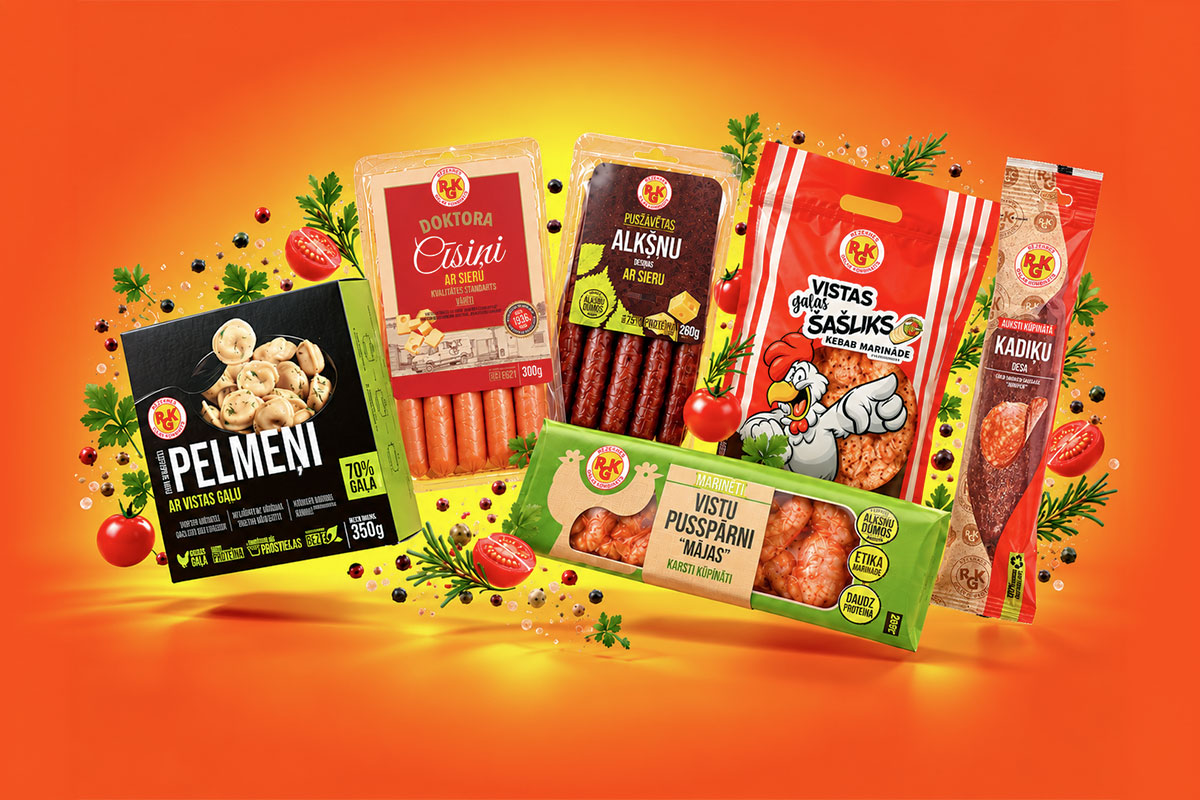
In 2001, Rēzeknes Gaļas Kombināts began with about 25 people and 20 products. Today, the Rēzekne-based processor reports annual sales above €75 million, serves export markets and has invested in new cold-storage and cutting capacity. Its growth is impressive, but the next chapter depends on margins, supply security and whether expansion can stay profitable.
In 2001, Rēzeknes Gaļas Kombināts had about 25 employees and roughly 20 products: frankfurters, sausages, cooked sausage and smoked meats. Its first customers were retailers in the Rēzekne area. The company’s history says that Rimi and Maxima became important customers as it grew. That is a modest beginning. By 2025, the company had 556 employees and reported €75.79 million in sales. Those later figures come from business records; the starting headcount and product count are the company’s own retrospective.
A local start, followed by a series of practical steps
Rēzeknes Gaļas Kombināts did not grow through one dramatic leap. Its history reads more like a sequence of decisions about what a meat processor needed next: food safety systems, upgraded facilities, more kinds of products, and the ability to store and ship them.
Some Rēzeknes Gaļas Kombināts early milestones give a feel for that pattern:
- In 2002, the company introduced a HACCP food-safety system.
- In 2006, following modernization, it said its production facility had been brought into line with EU requirements and equipped with a modern slaughterhouse.
- In 2009, it opened a meat-canning workshop; the company says this widened its range and increased exports.
- In 2010, it opened a dumpling and frozen-food plant in Piņķi. In 2012, cold-smoked sausage production began in Daugavpils.
That is a broader footprint than the company’s Rēzekne name alone might suggest. New locations brought different production capabilities, while the product range moved beyond the original mix of sausages and smoked meats.
The company also tried to create reasons for shoppers to recognize particular lines. Its history records a “Bez E” range developed with the Latvian Doctors’ Association in 2011, and the launch of “Reālie” dumplings in 2014. It later introduced “Boņuka mīļākie,” a line that included products aimed at children. The company’s own records also list product awards over the years. These are useful clues to how it approached growth: not simply making more of the same, but adding frozen foods, canned meat and products with a specific audience in mind.
There was an early signal that the expansion was moving quickly. The company’s timeline says it received Latvia’s “Gazele” award in 2004 as the country’s fastest-growing company. That is a company-reported historical detail, but it fits the direction of travel: within a few years, the firm was investing in production standards and facilities that could serve a larger market.
The distinctive part of the story is the order of operations. First, build a more capable factory. Then broaden the product list and add formats that need different equipment and storage. Then improve the cold chain and distribution. It’s not a glamorous formula. It is, however, a credible way for a regional food maker to become a large supplier.
More than 550 jobs, and a new cold chain
The company’s 2025 accounts show annual sales of €75.79 million, just 0.2% higher than in 2024. Profit, though, rose to €1.51 million from €540,121 the year before—about 2.8 times as much. At a simple level, that puts net profit at about 2% of sales. A thin margin. In a business where ingredients, energy, wages and refrigeration all matter, a large sales figure does not automatically mean easy money.
The sales breakdown shows why exports matter. In 2025, revenue from Latvia was €49.26 million, down 4% from the previous year. Revenue from other EU countries reached €26.26 million, up 9.6%. Lithuania, Germany and Estonia were the biggest named markets in that group. Taken together, sales outside Latvia were about 35% of the company’s total.
There’s a small but telling contrast in those numbers: the home market softened while other EU markets grew. The company is still rooted in Latvia, but its next gains increasingly depend on convincing buyers elsewhere to keep ordering.
It is also important to compare like with like. Lursoft lists 556 employees for the company in 2025. Rēzeknes Gaļas Kombināts says its wider operation, including related companies, employs more than 700 people and makes over 300 products. Those are different measures: one is a count for the named company, the other is the company’s figure for its broader group. Even using the narrower number, the change from the original team of about 25 is striking.
The clearest recent sign of investment is a new freezer and warehouse complex with a meat-cutting workshop. It opened in Rēzekne on 10 September 2025 after more than €8 million in investment. The project added a 2,856.8-square-metre facility, ten pieces of equipment and an industrial refrigeration system. Solar panels, built with support from ALTUM, were also part of the project. These are concrete additions to storage and processing capacity, not just plans on a presentation slide.
We continue to invest in modernization to strengthen both the company’s competitiveness and the region’s development
Guntis Piteronoks, Rēzeknes Gaļas Kombināts
That is the Some Rēzeknes Gaļas Kombināts early milestones give a feel for that pattern: view of what the project means. The practical part is easier to see: a stronger cold chain can help a processor store more meat, handle it efficiently and supply customers over longer distances.
The investment has also received recent recognition. In September 2026, the company announced that the new complex had won first place in the production-building category of Latvia’s 2025 building awards. That recognition doesn’t prove the factory will earn a return on its cost. But it does put the new facility at the centre of the company’s next chapter.
Growth brings a different set of risks
For Rēzekne, a company with hundreds of employees and tens of millions in annual sales matters well beyond its product labels. It is a substantial local employer and a major business in Latgale: Lursoft’s 2025 regional ranking placed it second among the region’s companies by revenue. In a 2026 public-broadcaster report about the region’s economy.
An independent state can exist only with an independent and strong economy
Guntis Piteronoks, Rēzeknes Gaļas Kombināts
That is an owner’s argument for supporting local production, not an independent economic finding. Still, it points to the stakes: jobs, suppliers and production capacity in a region where large employers matter.
There are pressures on the business, too. Latvia produced 90.2 thousand tonnes of meat in 2025, a slight 0.5% decrease from 2024. The mix moved in different directions: pork and poultry production rose, while beef and veal fell. Processors depend on that supply, as well as on the cost of buying and moving it.
Animal disease is another risk. After a major African swine fever outbreak at a Latvian pig farm in 2025, Piteronoks told LSM, “The industry will import more meat from Europe” (translated from Latvian). That was his assessment of what the outbreak could mean for the market, not proof of how much additional meat was ultimately imported. It does show how quickly a processing company’s choices can be affected by conditions on farms.
What is confirmed—and what the company says
The sales and profit figures are based on the company’s 2025 annual reporting, as reported by LETA and Firmas.lv. The opening date and size of the new facility are documented by the company’s announcement. By contrast, the figures for more than 700 workers and over 300 products come from the company’s own description of its wider operation. Keeping those categories separate makes the growth story clearer, not smaller.
The Rēzeknes Gaļas Kombināts timeline also says its energy-management system was audited in 2026 against ISO 50001:2018. That is a company-reported update. Its 2022 history lists an A-level assessment under the BRC Global Standard for Food Safety for specified production processes. Together, these details point to the less visible work behind food manufacturing: maintaining standards, controlling energy use and keeping processes reliable as output expands.
Announced plans, not finished projects
In its 2025 annual-report information, management said it planned to begin construction of a second expansion phase, with the aim of increasing production and storage capacity, improving logistics and supporting export growth. The same report described energy costs and a difficult economic environment as ongoing concerns. The second phase is an announcement of intent; it should not be mistaken for completed construction.
Prediction and analysis
My read is that the next test will be utilization: can the company keep the new storage and processing capacity busy with repeat orders that earn a profit? The opportunity is visible in the 2025 figures—sales in other EU countries rose even as Latvian revenue slipped. But more capacity only helps if the added volume covers its costs. Energy prices, meat supply, food-safety controls and competition will all press on that calculation.
That is what makes the story interesting now. The remarkable part is no longer that 25 people built a company. It’s whether a business that has scaled this far can keep growing without letting the new scale outrun its margins. The first team had about 20 products to make. The next chapter has more cold rooms to fill—and a much bigger customer base to keep coming back.
Previous Post
Next Post
Previous Post

Next Post

Recent Posts
- 5 Biggest PS5 Games of September 2026 That Look Amazing
- 6 Powerful K-Pop Songs That Redefined Confidence
- Halloween History, Traditions and Modern Trends Around the World
- Mental Health and Stress Relief: Powerful Benefits of Time in Nature
- Rēzeknes Gaļas Kombināts: A Remarkable Growth Story That Began With 25 Employees

PhotographySeptember 16, 2026
Is the Sony A7 III Still Worth Buying in 2026—and Into 2027?
-
SoftwareSeptember 20, 2026
Graphic Design Tools 2026 Powerful Picks Worth Your Time
-
MotorsportSeptember 17, 2026
Electric Motorsport: Thrilling Speed, Tough Questions







- 01
- 02
PhotographySeptember 16, 2026
Is the Sony A7 III Still Worth Buying in 2026—and Into 2027?
- 03
DesignSeptember 20, 2026
Graphic Design Tools 2026 Powerful Picks Worth Your Time
- 04
MotorsportSeptember 17, 2026
Electric Motorsport: Thrilling Speed, Tough Questions


Advertisement