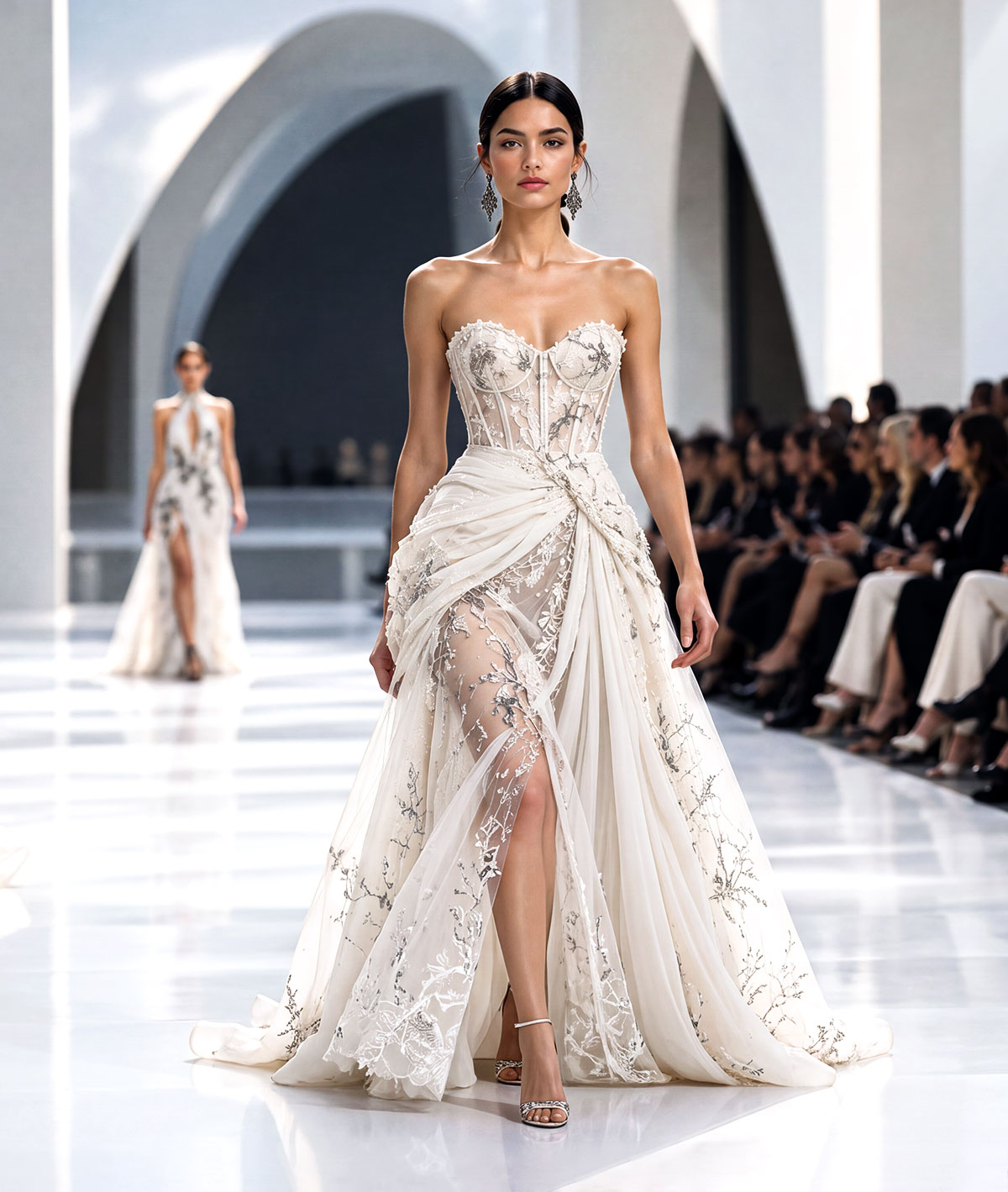
A bedspread became a runway
At Una Bērziņa’s spring show, models walked barefoot across a bedcover that had been stretched into a runway. A small, strange, lovely detail—and a good way into this year’s Riga Fashion Week. The collection, Stories: Part 5, played with the intimacy of getting out of bed and the public ritual of a fashion show. The scene was simple enough to picture, but it stuck.
That was part of the 42nd edition, held from 14 to 18 April. The Baltic Fashion Federation, which organizes RFW, says 18 designers took part in the main shows, split between Verde and Hanzas Perons. The spring season was labelled AW26/27; the next edition, still ahead as I write in late September, will show collections including work for Spring/Summer 2027. So “Riga Fashion Week 2026” means two very different moments this year.
The spring shows brought together Latvian designers, regional names and international participants. There were also exhibitions, workshops and a sustainability panel. In other words, the catwalk was the most visible part of a week that kept spilling into the city’s studios and cultural spaces. That mix is worth watching: it gives the event room to be about clothes, but also about who makes them, how they are seen, and where Latvian fashion sits in the wider region.
What the spring runway put on the table
The lineup included designers from Latvia, Lithuania and Estonia, as well as visitors from further afield. Three labels made their first appearance in RFW’s official program: Hannes Rüütel from Estonia, Paul Williams Atelier, whose designer works between Nigeria and the UK, and A.Cont, a Spanish brand. Ahead of the show, Williams described the collection as touching on “themes of adaptation, identity, and the inner strength people find when they have to rebuild their lives.” It is a personal story, but one with room for a larger audience to find its own way in.
Some of the clearest April moments came from designers who used a single visual idea to set the tone. METAL Magazine’s review picked out Laura Daili’s glass-inspired shapes and sculptural details, which carried through the collection Invisible Tension. It also described BAÉ by Katya Shehurina’s collaboration with Adidas as a blend of sport and eveningwear. At Iveta Vecmane’s show, a red sports car sat at the centre of the runway; the collection itself leaned on tailoring, clean lines and a restrained palette. Those were different kinds of drama: one built around material and shape, another around the set, then clothes that let the cut do the talking.
From a collection’s materials to who gets to wear it, every choice tells part of fashion’s story
Magazine SAVVY
There was a similar range in the international work. RFW’s preview said A.Cont’s collection, Sinapsis, explored human connection and the relationship between artistic thought and neuroscience. The brand described raw mohair, cotton and silicone among its materials. It’s the kind of detail that makes a show worth following beyond a quick look at the photos: a material choice can carry an idea, and sometimes a difficult one, all the way down the catwalk.
The week also made space for fashion’s neighbours. Its program included the photography exhibition Asnate Smeltere. Continuity at the Ola Foundation, a preview of Celebrity Wardrobes at the Riga Fashion Museum, and workshops at the Treimane Studio pop-up. The nearby Museum of Decorative Arts and Design was showing Art Deco to This Day: Design and Craftsmanship in France, a look at French tapestries, furniture and glasswork. Taken together, these events gave visitors a way to connect clothing with photography, design history and making by hand.
One other spring detail deserves a mention. The independent review in METAL praised the collections but raised a concern about the runway casting, saying it did not fully reflect the multicultural reality of the present day. That is the reviewer’s assessment, not a finding from the organizers. Still, fashion weeks build an image of who belongs in the room and in the clothes. Who gets to wear the work is part of the story.
Why this week matters beyond the clothes
Riga Fashion Week has been part of the region’s fashion calendar since 2004, organized by the Baltic Fashion Federation. The federation is also a founding member of the European Fashion Alliance, a network of fashion organizations that includes councils and industry groups from across Europe. That connection matters for a regional event: international guests can bring attention and contacts, while the Baltic designers bring their own stories, techniques and point of view. Neither outcome is automatic, of course. A runway appearance is a door opening, not a whole career.
There is an industrial base behind the show, too. Latvia’s Investment and Development Agency reports that, in 2023, around 8,923 people worked in 1,896 textile companies in Latvia, most of them small or medium-sized businesses. The sector made up 2.5% of manufacturing output. The agency also notes that many Latvian sewing companies produce for brands elsewhere in the EU, while a smaller group creates its own collections. These figures cover the broad textile and clothing sector, not just fashion labels. But they help explain the opportunity: Riga can connect design visibility with production know-how already present in the country.
There’s a challenge tucked into those numbers. Small companies and independent designers need ways to turn attention into repeat customers, export orders and sustainable production. My read is that RFW’s strongest role may be as a meeting place: a concentrated moment for designers, media and industry guests to find each other. The runway gives the clothes an audience; what happens after the applause is the longer test.
Sustainability, in particular, has shifted from a panel topic to an everyday business question. In April, RFW included Treimane Studio’s eco-collection, hands-on workshops and a discussion called “Sustainable Fashion: a Niche or the Future?” Meanwhile, the European Commission’s 2030 vision calls for textiles sold in the EU to be durable, repairable and recyclable, and reports that only 1% of clothing material is recycled into new clothing. For large businesses, the EU ban on destroying unsold textiles and footwear began applying in July 2026. One panel or one collection cannot transform an industry, but the pressure for credible materials and longer use is now part of the market around every fashion week.
October is the next act
The next edition runs from 20 to 24 October and will be the 43rd. Organizers say the season will include new collections, including Spring/Summer 2027 work. The main runway shows are planned for Hanzas Perons on 22 and 23 October, with additional presentations and events across Zunda Towers, designers’ studios and brand spaces. As of 27 September, the official program page still says the full schedule will be published soon, so the confirmed outline is more useful than guessing who will walk when.
A few things are confirmed so far:
- The event dates are 20–24 October, with the main runway at Hanzas Perons on 22–23 October.
- The autumn edition will feature collections for the Spring/Summer 2027 season.
- The campaign image pairs a skirt by established label Natalija Jansone with a brown coat by Katrina Ermanovica-Hermanovica and a white blazer by Yurgis Emils Liepins.
That last combination makes the campaign more than a date announcement. It puts a new generation’s work directly beside an established designer’s, and the stylist.
Emerging designers should not remain in the shadows
Eriks Ukass
My reading of the autumn teaser
The October lineup could show whether RFW’s promise of visibility for newer designers carries beyond a campaign image and a few minutes on the runway. Does that visibility lead to useful meetings, sales, press coverage, or work across borders? We’ll know more once the full schedule and participants are out. Those are questions for the coming edition, not promises the organizers have made.
For now, April left us with a bedcover pulled flat and asked to hold a collection. It’s a very Riga image: intimate, a little unexpected, and confident enough to make its own runway.