












Now Reading: Halloween History, Traditions and Modern Trends Around the World
-
01
Halloween History, Traditions and Modern Trends Around the World
Halloween History, Traditions and Modern Trends Around the World


Halloween began as a seasonal crossroads and grew into a holiday with many faces. Its best traditions—from turnip lanterns and barmbrack to trick-or-treating—travel differently from country to country. New surveys show how people celebrate now, where the holiday is strongest, and why its future may depend on balancing fun, cost and local custom.
Table of Contents
Before it was a pumpkin, the Halloween lantern was a turnip. The National Museum of Ireland’s ghost turnip collection record documents a turnip lantern received in 1943, a reminder that the familiar orange pumpkin is only one version of a much older custom. It is a small but revealing detail in Halloween History. Halloween’s ability to travel and change is part of its story: a night tied to harvest and the dead became a neighborhood ritual, a costume party and, eventually, a major retail season. That transformation is central to understanding Halloween History, Traditions and Modern Trends Around the World.
Updated November 22, 2026: Historical sources, Halloween survey figures and festival details have been reviewed and updated.
The History of Halloween Is Layered, Not Simple
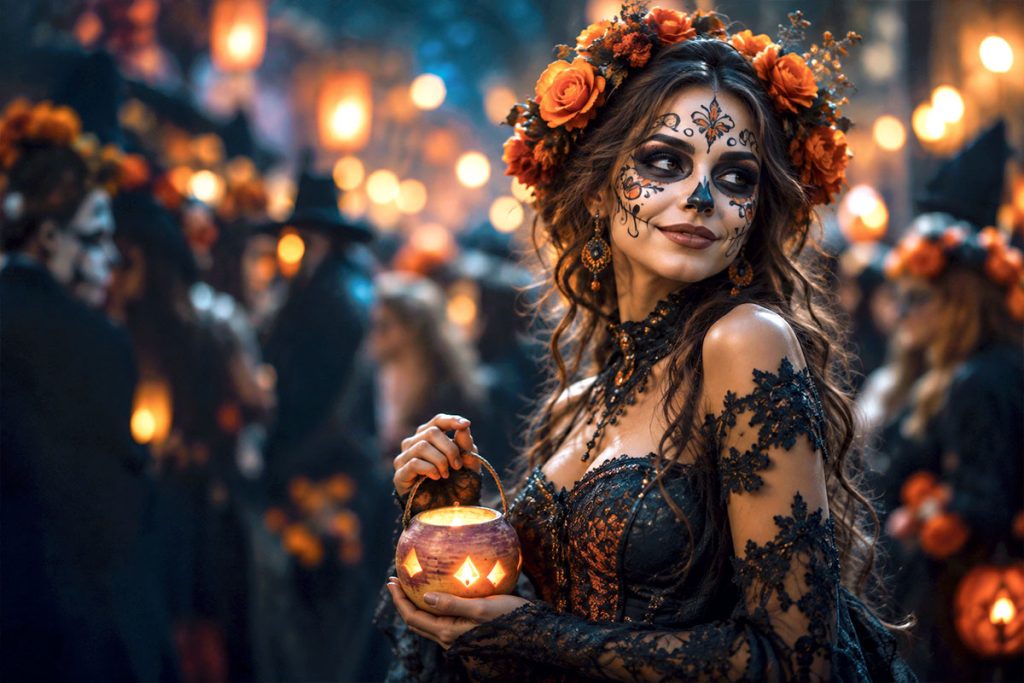
Halloween is observed on October 31, the eve of All Saints’ Day, also called All Hallows’ Day. Its roots are commonly traced to Samhain, a Gaelic seasonal festival marking the turn toward winter around November 1. The name “Halloween” comes from All Hallows’ Eve. Tracing Halloween History reveals a mingling of customs over time, rather than one ancient festival surviving unchanged under a new name. That mixture continues to influence Halloween Celebrations, where older seasonal traditions coexist with costumes, lanterns and modern community events.
At Samhain, people were said to believe that the boundary between this world and the spirit world grew thin. They lit fires, left food offerings and wore disguises, according to accounts of the customs. The seasonal change was the heart of it: the harvest was ending, the darker half of the year was beginning, and familiar rules felt a little less firm. “Samhain is really the marker of the end of a season,” says Dr. Kelly Fitzgerald, head of the School of Irish, Celtic Studies and Folklore at University College Dublin, in an interview with Tourism Ireland.
It’s a night that reflects our deepest anxieties about life and death, and how we ritualize those fears
Jeremy Cohen, Religious Studies professor
Christian observances added another layer. All Saints’ Day fell on November 1, followed by All Souls’ Day on November 2. In parts of Ireland and Scotland, customs such as “guising” brought masked visitors to neighbors’ doors. In England and Ireland, “souling” involved people asking for food and, in return, offering prayers for the dead. These practices help explain later door-to-door visits, though modern trick-or-treating did not simply arrive intact from ancient times. The phrase appeared in the United States in the 1920s; the custom became widely popular after World War II. Irish and Scottish immigrants brought Halloween customs to the United States in large numbers from the mid-19th century onward.
Customs worth keeping
The best traditions, to my mind, are the ones that make the evening feel local. In Ireland, that might mean a turnip lantern or barmbrack, a fruit bread sometimes baked with a ring or coin inside. A party game, an old ghost story, a bonfire or a bowl of apples can do more to make Halloween memorable than a shopping bag full of plastic decorations. Halloween Celebrations gain much of their character from these local details, which also help explain the different traditions and modern trends around the world.

Image: AI-generated illustration of children and adults in Halloween costumes enjoying trick-or-treating on a decorated neighbourhood street. Created for illustrative purposes.
The National Museum of Ireland sums up the holiday’s continuing place in Irish life: “The eve of this day, Oíche Shamhna, Hallowe’en, is still celebrated all over Ireland with feasting and games.” In the United States and Canada, the classic neighborhood circuit still has its own charm: a homemade costume, a lit porch, a walk with the kids, then a quick sort of the sweets on the kitchen floor. Halloween Celebrations can take many forms, but familiar activities like these make the evening feel personal. And yes, carving a pumpkin remains a good tradition. It is just not the only one.
We have introduced Halloween back to adults, with costume parties, beginning largely in the 1960s-70s
Jeanmarie Rouhier-Willoughby, Folklorist
Today, Halloween lasts longer than one night
The National Retail Federation’s (NRF) 2026 Halloween survey found that 74% of U.S. consumers planned to celebrate, compared with 68% in 2019. In euro terms, the survey’s 2026 spending forecast is approximately €12.28 billion, compared with around €11.92 billion for the NRF’s 2025 estimate.
These Halloween Spending 2026 figures represent expectations based on shopping plans, not a final tally of money spent. The amounts have been converted from the original U.S. dollar figures using the European Central Bank reference exchange rate for November 20, 2026.
NRF and Prosper Insights & Analytics surveyed 7,889 consumers from September 1–9, with a reported margin of error of plus or minus 1.1 percentage points. The findings show how Halloween 2026 continued to attract strong consumer interest despite concerns about affordability.
What did people plan to do for Halloween 2026? Hand out candy (61%), dress in costume (50%), decorate their home or yard (42%), carve pumpkins (42%) and watch scary movies (42%) were the leading activities. The survey’s estimate of average spending was approximately €104.77 per person when converted using the November 20 ECB reference rate. Candy remained the most popular planned purchase, while costumes and decorations were expected to account for more money overall. These Halloween Spending 2026 estimates highlight how much the holiday has grown beyond a single evening of trick-or-treating.
Consumers continue to make Halloween a spending priority, but they are also approaching the season with affordability in mind
Allison Zeller, NRF Vice President of Industry and Consumer Insights
That fits the survey’s other figures: 31% of respondents said they would compare prices if Halloween items cost more than expected, and 34% said they would look for items they could reuse or repurpose.
The “season” part is real, too. Nearly half of U.S. respondents planned to begin shopping in September or earlier, up from 34% in 2016. For Halloween 2026, one newer shopping habit was the use of AI: 47% said they were using AI tools to help with Halloween shopping, often to brainstorm ideas or get recommendations. Yet the costumes were not all new internet-born characters. Witches and vampires topped NRF’s adult costume list, while Spider-Man led the children’s list. The blend is very Halloween: a fresh trend beside the witch who has been showing up for generations.
Where Halloween is big—and where it is smaller
The United States is a clear heavyweight by participation and retail spending: NRF’s 2026 survey found 74% planning to celebrate, with consumer spending projected at approximately €12.28 billion after conversion from U.S. dollars. These Halloween Spending 2026 expectations underline the holiday’s importance to American retailers.
In Great Britain, a separate YouGov survey conducted in September 2025 found that 49% of adults celebrated Halloween, while 51% did not. The most common activities reported were handing out sweets (28%), watching Halloween films (24%) and carving pumpkins (22%). These results offer an interesting comparison, although the surveys were conducted in different countries and years.
Canada sits somewhere in between on one 2025 measure. Leger found that 31% of adults planned to celebrate; among households with children old enough to go trick-or-treating, 80% planned to do so. In Australia, an Australian Retailers Association and Roy Morgan survey found that more than one in five adults—about 4.8 million people—were gearing up for Halloween. These comparisons reveal how traditions and modern trends around the world can produce very different levels of participation. The surveys use different questions and methods, however, so they should not be treated as a precise country ranking.
A 2025 Recruit Hot Pepper survey of adults aged 20–69 in Japan’s Kanto, Tokai and Kansai regions found that 15.7% planned to take part in Halloween events, a second yearly decline. It’s a useful sign that participation can be more limited, even where the holiday is visible. And Mexico needs a different kind of care in this conversation: Día de los Muertos is related in calendar and imagery, but it is a distinct tradition, centered on remembering the dead and welcoming them through family observances such as ofrendas. Treating it as simply another Halloween would miss what makes it meaningful.
What may shape Halloween’s next chapter
Ireland has increasingly placed its historical connection to Halloween at the centre of its autumn festival season. Fáilte Ireland’s 2026 Home of Halloween programme included seven destination hubs alongside flagship celebrations such as the Púca Festival and Derry Halloween. Derry marked the festival’s 40th anniversary with events scheduled from October 28 to November 1, 2026. Fáilte Ireland also reported that its 2025 programme supported more than 830 events, attracted over 322,000 visitors and generated more than €43 million in economic impact. Those figures come from the tourism agency rather than an independent audit cited here.
Halloween may continue stretching across the calendar, pulled along by early shopping, pop-up attractions and festivals that give people a reason to make a weekend of it. But cost pressure could push in the other direction, towards homemade costumes, shared decorations and one small neighbourhood ritual instead of an expensive night out. Similar interest in local seasonal traditions carries into winter, as explored in Magazine SAVVY’s Riga at Christmas 2026 guide. The challenge is to make these celebrations welcoming without sanding away the stories that give them character.
A turnip with a crooked face still says plenty. Halloween History reminds us that the holiday has always been capable of change, while its traditions and modern trends around the world show how different communities continue to make it their own. Halloween can be enormous, commercial and loud; it can also be a game, a loaf of bread or a porch light left on for the children next door.
Previous Post
Next Post












Advertisement