















Now Reading: What’s New in Gadgets This October 2026? Four Exciting Tech Releases in Europe
-
01
What’s New in Gadgets This October 2026? Four Exciting Tech Releases in Europe
What’s New in Gadgets This October 2026? Four Exciting Tech Releases in Europe

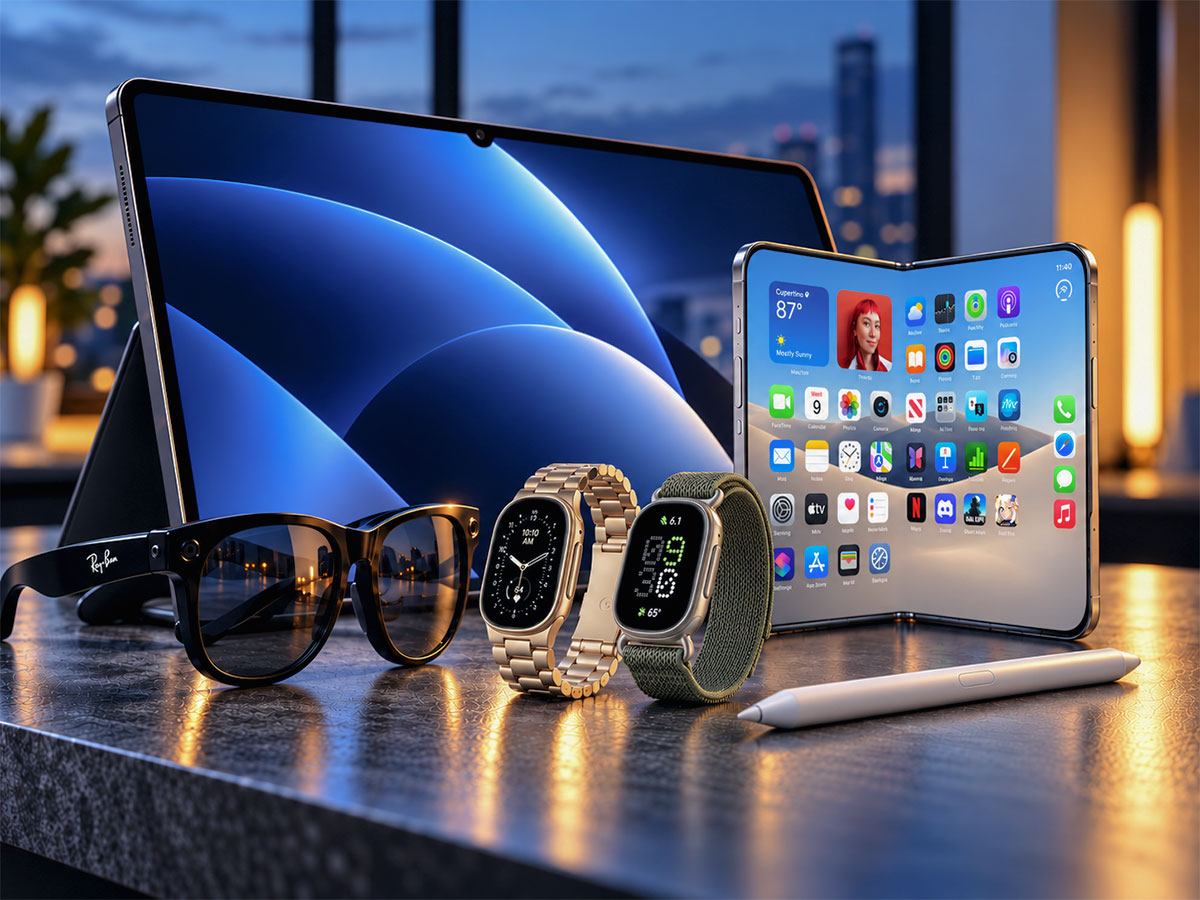
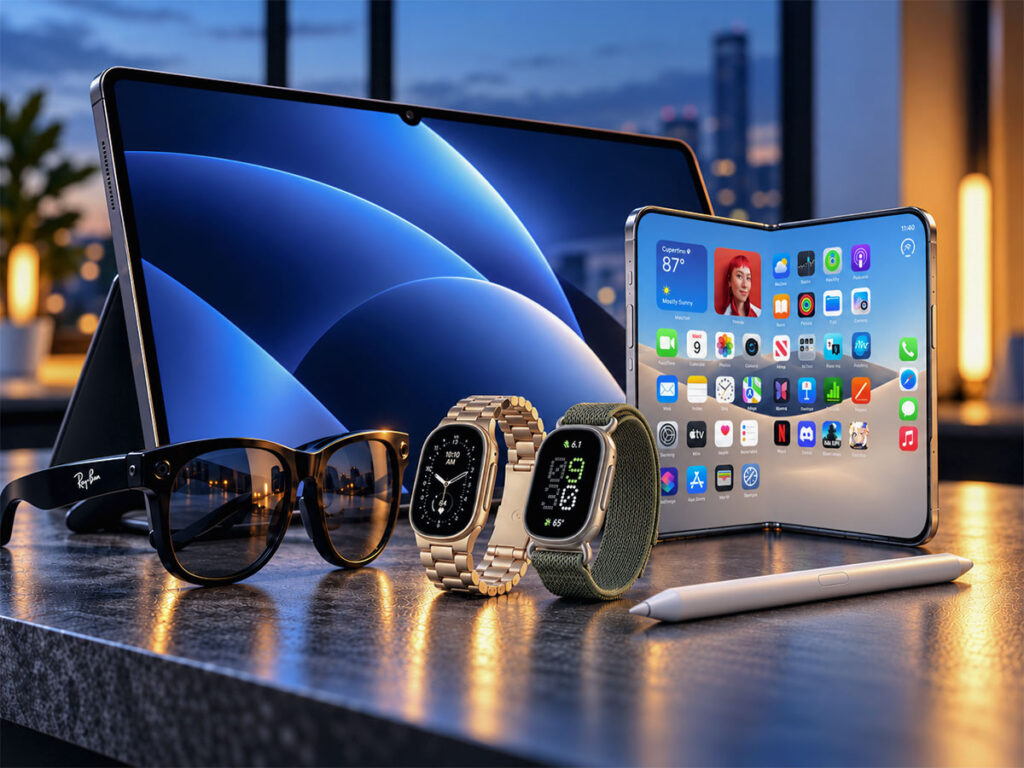
Discover what's new in gadgets this October 2026, from Apple's first foldable iPhone and Samsung's premium Galaxy tablet to Ray-Ban Meta Audio Glasses and Google's Fitbit Edge. Explore European prices, confirmed features, launch dates, regional limitations and the innovations that might actually make everyday technology more useful.
Imagine walking into an Apple Store in Germany on 23 October 2026 and seeing an iPhone that opens like a book. The price tag? A rather eye-watering €2,299. Meanwhile, Samsung has a tablet almost as large as a laptop screen, Meta is selling smart glasses without cameras, and Google is preparing to release a fitness tracker that promises a week’s battery life.
October 2026 has turned into an interesting month for gadget enthusiasts. Not because every company has announced something completely unexpected, but because familiar devices are starting to take noticeably different forms.
Apple’s iPhone Duo brings foldable technology into the iPhone family. Samsung’s Galaxy Tab S12 Ultra pushes Android productivity further, while Ray-Ban Meta Audio Glasses and Google Fitbit Edge take a more focused approach to wearable technology.
For European buyers, however, there’s more to consider than attractive specifications. Prices include local VAT, certain AI features aren’t available across every EU country, and release dates can vary depending on the market.
Here’s what’s actually new, what these gadgets cost in euros, and whether they’re worth getting excited about.
October 2026 Gadget Releases: European Prices and Availability
Before getting into the details, here’s a quick look at the four products and their verified European pricing.
- Apple iPhone Duo — from €2,299: Available from 23 October in Germany, France and other initial launch markets. The 256GB model starts at €2,299 in Germany.
- Samsung Galaxy Tab S12 Ultra — from €1,539: Released from 7 October in selected European markets. The German starting price covers the 256GB Wi-Fi model.
- Ray-Ban Meta Audio Glasses — from €349: Listed at this price for selected configurations in France, with other lens and frame options costing more. Some European listings still show pre-order availability.
- Google Fitbit Edge — from €179.99: Available for pre-order in countries including Germany and Ireland, with its retail launch scheduled for 27 October.
These are published European retail prices, not currency conversions from American launch announcements. Prices, configurations and stock availability may differ across EU countries.
Bigger Screens Are Getting More Interesting
Apple iPhone Duo — The First Foldable iPhone Is Finally Here
Apple officially introduced the iPhone Duo on 9 September 2026, with European pre-orders beginning on 16 October and sales starting on 23 October in the first launch countries.

Image: Official press release image published by Apple.
The big attraction is its folding design. Closed, the device has a compact 5.4-inch Super Retina XDR display. Open it, and you get a much larger 7.6-inch screen with a special nano-textured surface designed to reduce glare and make the fold less noticeable.
Both displays support Apple’s ProMotion technology, while the A20 Pro processor powers multitasking, gaming and photography. The titanium body, reinforced hinge and IP68 water- and dust-resistance rating show how seriously Apple is treating durability.
There’s also a dual 48-megapixel rear-camera system, although buyers should note that it doesn’t include a separate dedicated telephoto lens.
iPhone Duo is the most transformational change to iPhone since the original
John Ternus, Apple CEO
That’s Apple’s assessment, of course. The more interesting question is whether folding an iPhone actually improves daily life.
It certainly creates useful possibilities. You could keep a train timetable open beside Google Maps, compare two websites while shopping, or watch a video while answering messages. Apple has adapted iOS 27.1 with Split View, improved app switching and saved app combinations, making the larger screen feel more purposeful.
Still, the device has some compromises. In its October review, WIRED rated the iPhone Duo 7/10, praising the folding hardware but pointing out that some applications haven’t been properly optimised. Reviewers also reported occasional heat issues, which matter when you’re paying premium-laptop money for a smartphone.
For Europeans, there’s another important limitation: Apple says its new Siri AI experience isn’t initially available in the EU on iOS. Other Apple Intelligence features support several European languages, but they shouldn’t be confused with the full Siri AI experience advertised elsewhere.
Apple has also announced Apple Pencil USB-C compatibility for later in 2026. That’s a future software addition, not something buyers should assume is already available.
At €2,299 for 256GB, the Duo is difficult to recommend to everyone. But for someone who frequently works on a phone and wants a bigger screen without carrying another device, it offers something genuinely different.
Samsung Galaxy Tab S12 Ultra — A Massive Tablet for Work and Creativity
While Apple is turning a smartphone into a mini tablet, Samsung is pushing its flagship tablet closer to laptop territory.

Image: Official press release image published by Samsung. Simulated for illustrative purposes.
The Galaxy Tab S12 Ultra launched in selected markets on 7 October 2026. Its enormous 14.6-inch Dynamic AMOLED 2X display offers a 2960 × 1848 resolution and a 120Hz refresh rate, making it appealing for drawing, video editing, multitasking and entertainment.
Despite that screen size, the tablet is just 5.1mm thick. It runs on MediaTek’s Dimensity 9500 processor and offers configurations with up to 16GB of RAM and 1TB of storage, plus microSD expansion.
The included S Pen is another advantage. European customers don’t need to purchase the stylus separately, although keyboards and other productivity accessories cost extra.
The Galaxy Tab S12 series is designed for people who are constantly exploring new ideas, developing new skills, and bringing their ambitions to life
Jay Kim, Executive Vice President
Samsung’s message is clearly centred on productivity, and the software supports that ambition. Multi Window can display up to three applications simultaneously, while Samsung Notes, Galaxy AI and DeX help organise demanding workflows.
Picture a university student in Amsterdam watching a recorded lecture, taking handwritten notes and researching a topic on the same screen. Or a freelance designer in Berlin using the S Pen to sketch ideas before moving into a creative application. Those are realistic situations where the extra display space becomes valuable.
However, independent reviewers remain cautious about calling it a laptop replacement. GSMArena’s review, published on 14 October, praised its hardware, battery life and versatility, while noting that Android cannot fully match Windows or macOS software compatibility.
Battery life is another area where expectations need context. Samsung advertises up to 23 hours of video playback, but continuous web browsing and intensive creative work produce different results.
In Germany, the 256GB Wi-Fi model starts at €1,539, with the 5G version priced at €1,689. Higher storage options cost considerably more, and adding a keyboard increases the total again.
For artists, students and professionals who genuinely use a large touchscreen, it’s compelling. For ordinary browsing and streaming, though, spending over €1,500 may be unnecessary.
Smart Wearables Are Becoming More Practical
Ray-Ban Meta Audio Glasses — Smart Technology Without a Camera
One of the more surprising gadget announcements this autumn came from Meta. Rather than adding another camera or display, the company removed a feature from its smart glasses.

Image: Official press release image of Ray-Ban Meta Audio – Burbank, published by Meta.
The Ray-Ban Meta Audio Glasses, announced on 23 September, focus on open-ear sound, phone calls and voice assistance. There’s no built-in camera, which also means no photo or video recording.
That might sound like a downgrade, but there’s a clear reason behind it.
Audio has been our most popular feature since day one
Meta
The glasses are available in Clubmaster and Burbank styles, with prescription-compatible options and different lens finishes. Meta says the lighter design weighs approximately 43 grams and offers up to 12 hours of use per charge, plus another 48 hours through the charging case.
Open-ear speakers mean you can listen to music, receive directions or answer calls without completely blocking surrounding noise.
Imagine cycling along a familiar route in Copenhagen or walking through central Paris with navigation instructions playing quietly through your glasses. You can still hear traffic and conversations while keeping your phone in your pocket. You should, naturally, keep the volume sensible and remain aware of your surroundings.
Privacy is another selling point. Removing the camera addresses concerns about people being filmed without permission, although voice-assistant interactions still involve data processing. Buyers should review Meta’s privacy controls and understand what information is stored when using AI features.
In its 24 October review, WIRED awarded the glasses 8/10, praising their call quality and comfort. The reviewer also noted that sound can leak to nearby people and that bass performance is limited.
For European shoppers, basic configurations have appeared around €349 in France, while some lens options cost €379 or €429. Availability remains country-dependent, and not every EU market is included in Ray-Ban’s supported-country list.
Meta has also announced Muse, a more capable personal AI agent intended for its glasses ecosystem. That’s a future development rather than a reason to assume every advertised AI experience already works in every European language.
The biggest attraction is simplicity. These aren’t trying to replace your phone; they’re trying to make reaching for it less necessary.
Google Fitbit Edge — A Fitness Tracker That Doesn’t Try to Be a Smartwatch
Google’s Fitbit Edge, announced on 12 October 2026, takes a similarly focused approach.
It’s designed for people who want meaningful health and fitness information without wearing a large smartwatch. The device sits between Google’s screenless Fitbit Air and the more feature-heavy Pixel Watch range.

Image: Official press release image published by Google.
At €179.99 in Germany and Ireland, it is also the least expensive gadget covered here. Pre-orders are open, with retail availability scheduled for 27 October.
The Edge features a Hybrid OLED display offering 46% more viewing area than previous Fitbit trackers, according to Google. There’s a physical side button, built-in GPS, interchangeable straps and automatic recognition of up to 100 types of activity.
For runners, that means tracking pace, routes and heart-rate zones without constantly checking a smartphone. For less dedicated athletes, it means walks and everyday movement can be recorded automatically.
Google promises up to seven days of battery life, although that figure depends on settings and usage. Enabling the always-on display can significantly reduce endurance, so buyers shouldn’t assume a full week under every condition.
Health tracking is more ambitious than the device’s small size suggests. Google’s official announcement describes ECG functionality, skin-temperature monitoring, sleep analysis, recovery insights and Health Guardian tools that assess changes in wellness-related measurements.
These are manufacturer-described capabilities, not proof of medical accuracy. Some features depend on regional availability, and Google’s AI-driven insights are not intended to replace professional medical advice.
Related Posts

Previous Post
Next Post
Previous Post

Next Post













Advertisement