


Now Reading: Graphic Design Tools 2026 Powerful Picks Worth Your Time
-
01
Graphic Design Tools 2026 Powerful Picks Worth Your Time
Graphic Design Tools 2026 Powerful Picks Worth Your Time

Graphic design software in 2026 is less about finding one perfect app and more about choosing the right workflow. Here’s what Adobe, Figma, Affinity, Canva, Penpot, and Procreate actually do well, where their AI and pricing models differ, and which kind of designer each tool rewards.
On September 20, 2026, you can download a full vector, photo-editing, and page-layout suite for €0, subscribe to Adobe Photoshop for €25.99 a month in Germany, or buy Procreate once for €14.99. That little price comparison says a lot about graphic design software right now.
The tools are splitting into distinct camps: precision production, browser-based teamwork, template-driven publishing, open-source collaboration, and highly personal digital drawing. AI is threaded through most of them, too, though not always in the same way.
So which graphic design tools are actually worth learning in 2026?
Why 2026 feels different
The biggest change is not that every app suddenly has an AI button. It is that design software now makes a stronger claim about where the work should happen.
Figma wants design, prototyping, code handoff, presentations, websites, and AI agents in one shared workspace. Canva wants anyone on a marketing or communications team to make polished content quickly. Penpot connects design to CSS, code, and self-hosted infrastructure. Procreate is taking the opposite route, keeping the experience focused on human-made illustration.
Then there is Affinity. In October 2025, Canva relaunched it as a single app combining vector design, pixel editing, and page layout—and made it free for individuals. The current Affinity site still lists Mac and Windows access at no cost, with an iPad version coming soon.
The financial difference matters. A freelancer choosing between a €0 desktop suite, a €14.99 iPad app, and a recurring subscription is making a workflow decision, not just shopping for features.
EU price snapshot checked September 20, 2026
Prices vary by country, billing cycle, VAT treatment, and whether a promotion is active. These are official prices I could verify from EU storefronts:
- Adobe Photoshop and Illustrator: €25.99 per month including VAT in Germany, on an annual plan billed monthly. The French pages list €26.21 per month including VAT for the equivalent annual plan.
- Adobe Creative Cloud Pro: €77.99 per month normally on Adobe Germany’s page, with a current new-customer offer of €38.98 per month for the first three months.
- Canva: €0 per year for Free, €110 per year for Pro, and €170 per year per person for Business on the German pricing page. The French page lists the higher tier as Pro+, at the same €170 annual price
- Procreate: €14.99 as a one-time purchase in both the German and French App Stores.
- Affinity: free for individuals. Penpot’s Professional plan is free and fully featured, while its paid public prices are currently shown in US dollars. Figma’s public pricing page also displays paid plans in US dollars, so I have not converted either figure into a fake “EU price.”
The best tool may be free, paid, open-source, or built for an iPad. What matters is whether it helps the idea survive from sketch to final file -Magazine SAVVY
The tools worth your time
Adobe Photoshop and Illustrator — still the precision pair
Adobe remains the sensible choice when files need to move through agencies, printers, photographers, and established brand teams without much negotiation.
Photoshop is built for pixel work: retouching, compositing, campaign imagery, and detailed image edits. Its current feature set includes Generative Fill, Generative Expand, Remove, Harmonize, and newer Firefly models. Illustrator handles vectors, logos, typography, icons, and scalable brand graphics, with tools such as Concept to Vector and Generative Shape Fill.
The weakness is obvious. You are paying every month, and the subscription is hard to justify if you only design a poster now and then. But if your work depends on polished production files, deep color control, mature export options, or client compatibility, Adobe still earns its place.
Figma — best for product teams
Figma is less about making a perfect standalone poster and more about keeping a product conversation alive.
Designers, developers, product managers, and clients can work in the same file. Figma’s current lineup includes Design, Dev Mode, FigJam, Slides, Draw, Make, Weave, Sites, Buzz, and Motion, with several newer products marked beta. Its AI workflows include design exploration, image editing, code-backed prototypes, and connections to existing codebases.
The Professional plan’s public price is currently $16 per month for a full seat, with separate Dev and Collab seats. That is a US-dollar listing, not a verified euro price.
The appeal is practical. As Francisco Seiz, Senior Design Director at Code and Theory, puts it: “Everyone is able to influence, inspire, and give input without ever leaving the design file.”
That is exactly where Figma feels strongest: shared decisions, quick iteration, and fewer handoff surprises.
Affinity by Canva — the most interesting bargain
Affinity is the wild card. It combines vector, pixel, and layout work in a fast desktop application, supports formats such as PSD, AI, PDF, SVG, TIFF, and IDML, and does not require a subscription for individual users.
Recent additions include a Blend Tool and in-app scripting across vector, pixel, and layout tools. Canva Premium subscribers can also unlock Canva AI inside Affinity, while the core software remains free.
This is a particularly good pick for independent designers who want serious control without adding another monthly bill. The compromise is collaboration. Affinity’s center of gravity is still the individual file, so a team may need Canva or another platform for reviews, approvals, and large-scale publishing.
Canva — for getting the work out
Canva is no longer just the app people use when they do not know Photoshop. It is a fast production system for social posts, presentations, campaigns, event graphics, short videos, and branded content.
The German pricing page lists Canva Pro at €110 per year for one person, with premium templates, 100 GB of storage, five Brand Kits, content scheduling, and AI tools. Business is €170 per year per person and adds deeper team administration, more Brand Kits, approvals, and higher AI allowances.
The best argument for Canva is consistency at speed. Megan Kelley, an Upworthy writer quoted on Canva’s About page, says: “We can put our visual content together very easily and consistently, and we can edit graphics across the entire team, which is a huge advantage.”
That is the sweet spot. Canva is less satisfying when you need unusually precise typography, complex prepress control, or a visual system that must be built from scratch.
Penpot — for open, code-aware teams
Penpot is the choice for teams that want design to speak more directly to development.
It uses SVG-based vector editing and includes Flex Layout, CSS Grid, custom font management, responsive prototyping, and design-system tools. Its self-hosting option can run in a private cloud, on-premises, or another environment controlled by the organization.
Penpot’s Professional plan is free and fully featured. The paid public prices are listed in dollars: $7 per editor per month for Unlimited and $25 per member per month for Enterprise. Since Penpot does not publish those figures in euros on the page I checked, treat them as dollar prices rather than converted EU rates.
Its open MCP server is also free and open, letting teams connect Penpot with AI agents and language models through its plugin API. A customer testimonial from Brett Haymaker, published on Penpot’s pricing page, captures the appeal: “The controls felt very intuitive to me – way more intuitive! They map nicely to the mental models of actual CSS.”
There is a learning curve, especially for teams moving from more familiar commercial tools. But the link between layout and code is unusually clear.
Procreate — for illustration that should feel drawn
Procreate is still the specialist: an iPad-first drawing and painting app with more than 300 handcrafted brushes, advanced layers, animation features, page tools, and Apple Pencil support. The App Store price is €14.99 in Germany and France, with no recurring subscription.
Procreate also says it does not use generative AI in its apps and does not track user activity. That position will not suit everyone, but it gives the product a clear identity.
Use it for illustration, lettering, storyboards, concept art, and hand-made assets. Do not choose it as your main tool for product design, team review, or complex multi-page brand systems.
Read the labels before you choose
Software pages often mix hard facts with sales language. Here is the useful dividing line.

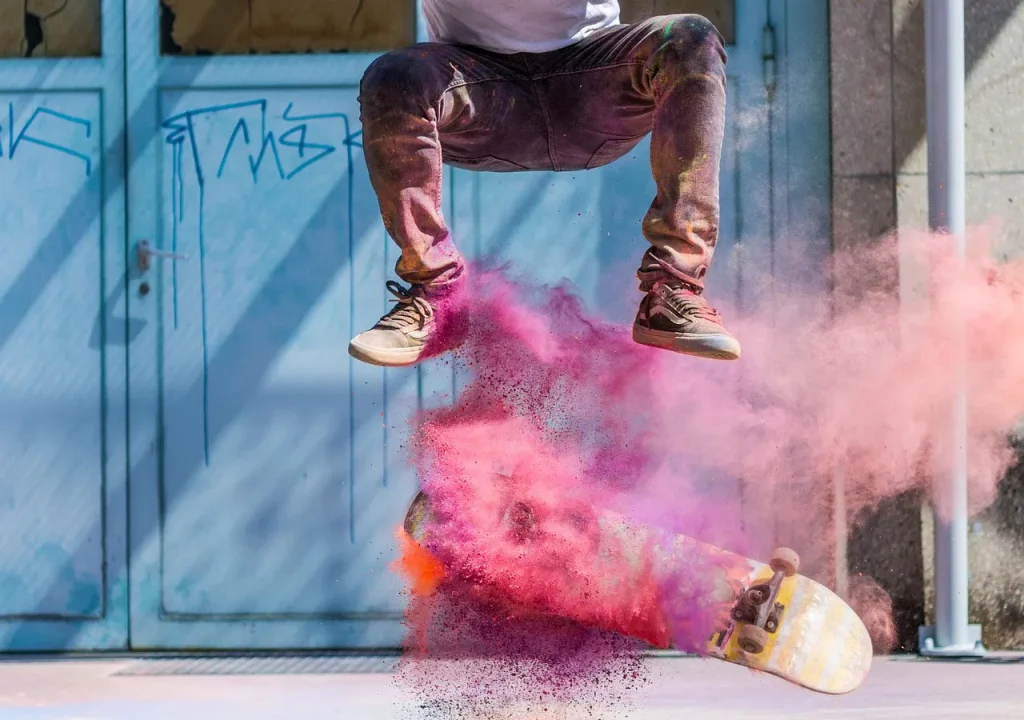
Illustration created with Adobe Firefly for illustrative purposes.
Confirmed facts
These are details directly visible in current product pages or storefront listings:
- Affinity is free for individuals on Mac and Windows.
- Canva’s German page lists Pro at €110 per year and Business at €170 per year per person.
- Procreate is listed at €14.99 in the German and French App Stores.
- Figma Starter is free with limited access.
- Penpot Professional is free and fully featured.
- Adobe’s German pages list Photoshop and Illustrator at €25.99 per month including VAT.
Statements made by the subject or organization
Canva says it has more than 220 million monthly active users and more than 30 billion designs. Figma says 95% of Fortune 500 companies use Figma, based on data from March 2025. Procreate says it has no generative AI and does not track activity in its apps. These are company statements, not independent audits.
Announcements and future plans
Canva announced the ProSuite on September 16, 2026, connecting Affinity, Cavalry, Flourish, and Leonardo. The announcement says Cavalry content will soon be editable inside Canva and that a new Affinity iPad app is expected in November 2026. Those are announced plans, not features every user can necessarily access today.
Predictions
My prediction is that the strongest tools will become more specialized, not less. Precision desktop apps will remain valuable for demanding production. Browser tools will own collaborative product work. Template platforms will keep expanding into marketing operations. Open formats, self-hosting, and clearer AI controls will matter more as teams ask where their files go and how generated material is used.
In 2026, the smartest design choice is not the app with the most features. It’s the one that fits the way your work actually moves -Magazine SAVVY
My analysis or opinion
If I were choosing today:
- Pick Adobe when compatibility and production depth matter most.
- Pick Figma for app, web, and product teams.
- Pick Affinity for powerful desktop design without a subscription.
- Pick Canva for frequent branded content and fast team publishing.
- Pick Penpot when code alignment, openness, or self-hosting is important.
- Pick Procreate when the work begins with a pencil-like gesture on an iPad.
The best value is not always the lowest number. It is the tool that lets you stay focused long enough to make something worth exporting. Sometimes that costs €0. Sometimes it costs €25.99 a month. The real question is whether the software gets out of your way when the idea finally arrives.
Previous Post
Next Post
Previous Post

Next Post






Advertisement

-
 01LISA in 2026: How “SaWaDiKa” Turns a Thai Hello Into a Powerful Solo Statement
 -
 02The Remarkable 2027 Travel Forecast: Five Destinations Set to Thrive
 -
 03Electric Motorsport: Thrilling Speed, Tough Questions
 -
 04Is the Sony A7 III Still Worth Buying in 2026—and Into 2027?
 -
 05Graphic Design Tools 2026 Powerful Picks Worth Your Time